A buoy report looks clean because it comes as a tidy stack of numbers: wind, gusts, wave height, period, direction, pressure, water temperature. The ocean is not tidy. The number that matters depends on what you are trying to do and what changed in the last few hours.
For a surfer, the first glance might be swell period and direction. For an angler, water temperature and wind can matter more than the headline wave height. For a small-boat run, gusts and steep short-period seas can turn a reasonable plan into a dock-day conversation. The trick is to read the buoy as a set of clues, not a verdict.
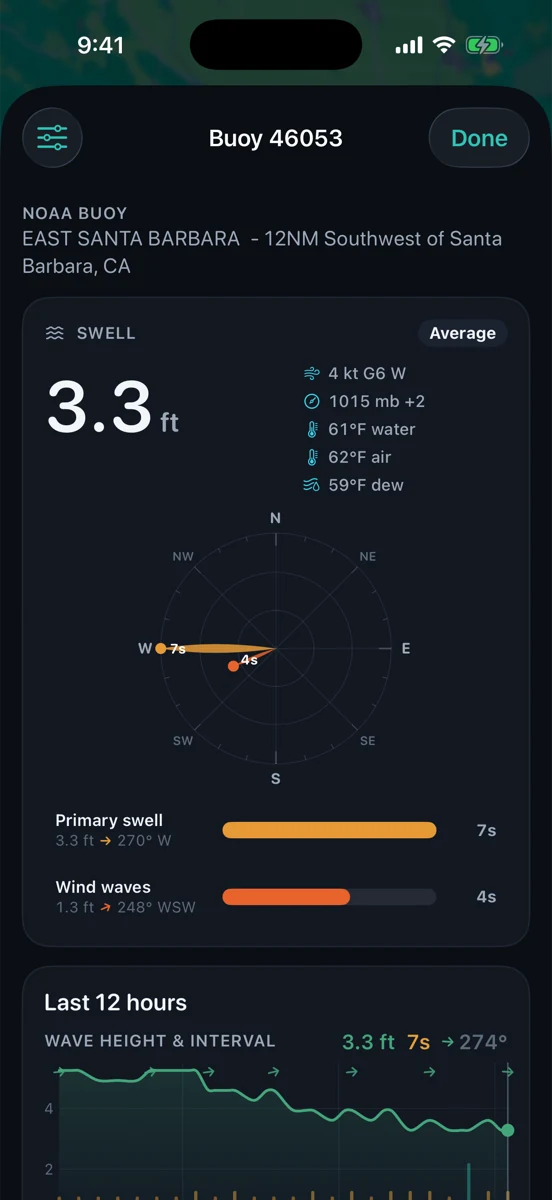
Start with the timestamp
Before any number earns your trust, check when it was reported. A fresh buoy observation is useful. A stale one is a note from earlier. NOAA/NDBC stations usually report on a regular cadence, but weather, telemetry, maintenance, and sensor issues can leave gaps. If the reading is old, treat it as context and look for a newer official forecast, a nearby station, or your own eyes on the water.
That is especially important around fronts and afternoon wind. The difference between a clean morning read and a building afternoon can be one or two update cycles.
Wind: speed, gusts, and direction
Wind speed is the average. Gusts are the slap in the face. Direction tells you whether that wind is blowing with the sea, against it, offshore, onshore, or across the stretch you care about. A 12-knot wind with 14-knot gusts is one kind of day. A 12-knot wind gusting 25 is a different animal.
Boaters should read wind with the route in mind. Anglers should think about drift, casting, and ride home. Surfers should ask whether the wind is grooming the face, adding chop, or making the buoy number look better than the beach will feel.
Wave height is not the whole story
Wave height tells you the combined sea state at the buoy. It can mix local wind chop, longer-period swell, and leftover energy from a system somewhere else. Two reports can both say 4 feet and feel completely different: 4 feet at 6 seconds is short, stacked, and bumpy; 4 feet at 16 seconds carries more energy and can show up with more push at the coast.
That is why period belongs next to height. Short-period seas often matter more for comfort and small craft handling. Longer-period swell can matter more for surf, harbor entrances, shoals, and exposed stretches of coast.
Direction tells you where the energy is coming from
Direction is easy to skip and expensive to ignore. A west swell, a south swell, and wind chop from the northwest do not light up the same beaches, anchorages, or channels. Local geography bends and blocks water. Islands shadow some directions and leave others wide open.
When direction and period change together, pay attention. A rising long-period west swell can turn a sleepy point into a real surf window. A short-period wind sea from the same direction as the afternoon breeze can make a channel crossing feel uglier than the tide chart suggested.
Trend beats snapshot
The latest observation is the headline. The last few hours are the story. Is the wind climbing? Are gusts widening? Is the wave period stretching out? Is pressure falling? Is the water temperature moving after a wind shift? A single reading can be a fluke; a trend helps you decide whether the day is building, backing off, or holding steady.
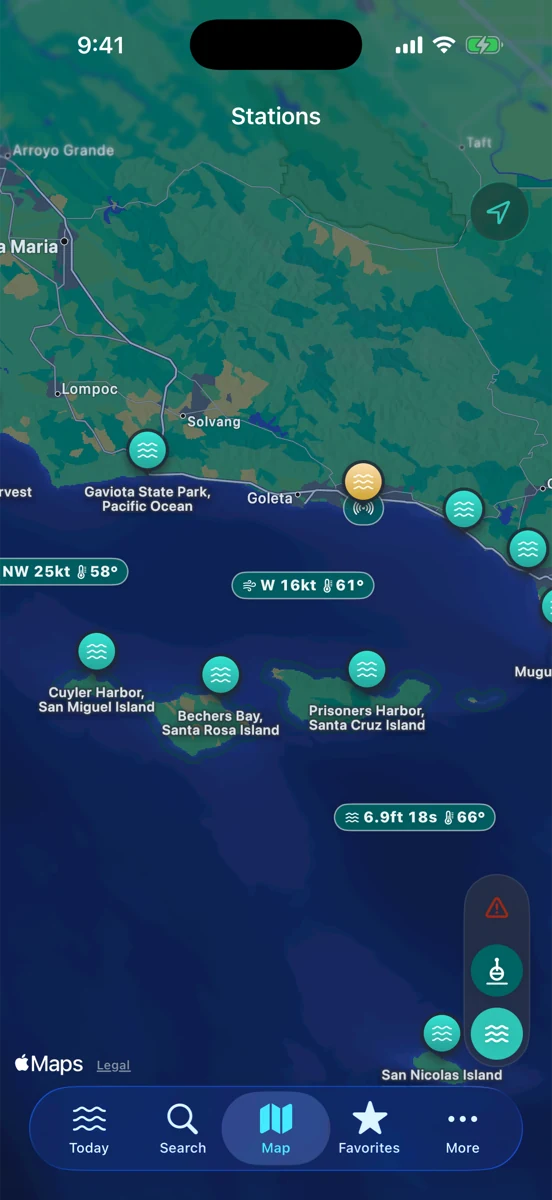
Put the buoy next to the forecast and tide
Buoys report what is happening at the station. Forecasts tell you what the National Weather Service expects across a marine zone. Tide predictions give you the astronomical baseline near a station. None of those replaces the others.
Rip’s rule: read the buoy, then read around it. Check the NWS marine forecast for the broader window, the tide curve for local timing, and the buoy history for what the water is doing now. If those disagree, slow down. The disagreement is often the most useful part of the check.
How RipCat helps
RipCat brings NOAA tide predictions, NDBC and compatible CDIP buoy observations, and National Weather Service marine advisories into one Apple-native app for U.S. waters. The goal is not to make the call for you. It is to put the live readings, history, forecast context, and tide timing close enough together that you can make a calmer plan.
If you want to go deeper by use case, start with the boating and sailing view, the fishing view, or the surf view. Station-specific tide pages are still in pilot review, so this post links to the segment guides for now.
Read the buoy before the plan gets expensive.
RipCat puts tide predictions, buoy history, and marine advisories in one clean app. U.S. coverage only. Observations, forecasts, and predictions are planning aids, not navigation advice.
Get RipCat free on the App Store