Ask ten surf fishermen for the best tide and you will hear ten versions of the same answer: moving water. Incoming tide can push bait and cleaner water up the beach. Outgoing tide can drain troughs, cuts, and river mouths. The bite is not guaranteed by either one. Fish still care about food, structure, temperature, light, swell, and pressure. But the tide decides when a beach starts changing.
That is the useful way to think about it. Do not ask, “Is high tide good?” Ask, “What does this beach do as the water rises or falls?” A flat sandy beach, a cobble point, a barred beach with troughs, and a harbor mouth can all fish differently on the same predicted tide.
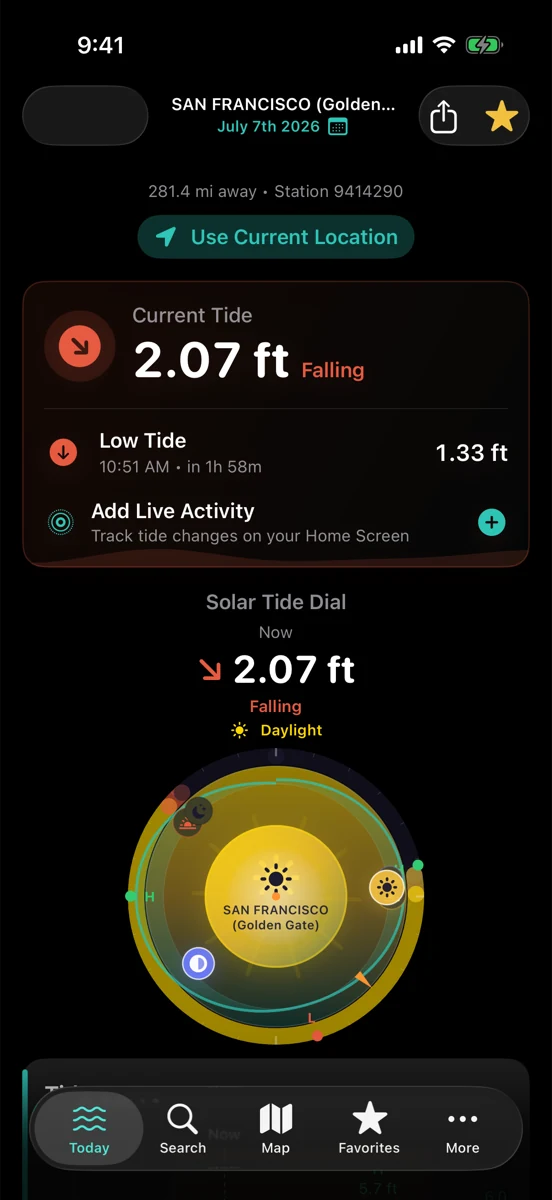
Incoming tide: covering new water
An incoming tide is popular because it opens fresh water. Waves push farther up the beach, small creatures get moved around, and fish can slide into areas that were too skinny an hour earlier. If you are walking a beach with troughs close to shore, the first half of the flood can be a good time to watch for nervous bait, birds, darker slots, and foam lines that keep reforming in the same place.
The mistake is waiting only for the printed high. By the time the curve tops out, the useful movement may be slowing. For many beaches, the better question is when the flood has enough water to cover structure but still enough push to move food.
Outgoing tide: draining the edges
The outgoing tide gets interesting when it drains water through cuts, troughs, rocks, lagoon mouths, or harbor edges. Moving water can concentrate bait and scent. It can also reveal the shape of the beach for your next session. A spot that looks random at high tide may show its gutters and bars as the water drops.
Outgoing water deserves extra respect near inlets, jetties, and steep beaches. Current can surprise you, and waves can hit differently as the depth changes. Treat the tide chart as planning context, not permission to stand somewhere sketchy.
Slack tide is a reset, not a rule
Slack water near high or low can be slow because the conveyor belt pauses. That does not mean it is useless. Slack can be the time to change rigs, move down the beach, check the next cut, or wait for wind and light to improve. If fish have been feeding through the push, the turn can keep them close for a bit. If nothing is happening, slack is often Rip’s nudge to keep walking.
Match the tide to beach structure
Surf fishing gets better when you stop reading the tide in isolation. A high tide on one beach might put water against dry sand with nowhere for fish to hunt. On another beach, it might cover a trough that finally puts bait within casting range. Low tide might be too skinny to fish, or it might expose the trough, bar, and cut that explain exactly where to come back on the flood.
Look for places where water is doing work: a rip line pulling foam seaward, waves breaking softer over deeper troughs, seams along rocks, or a small outflow that stains the water. The tide prediction tells you when to look. The beach tells you whether the window is real.
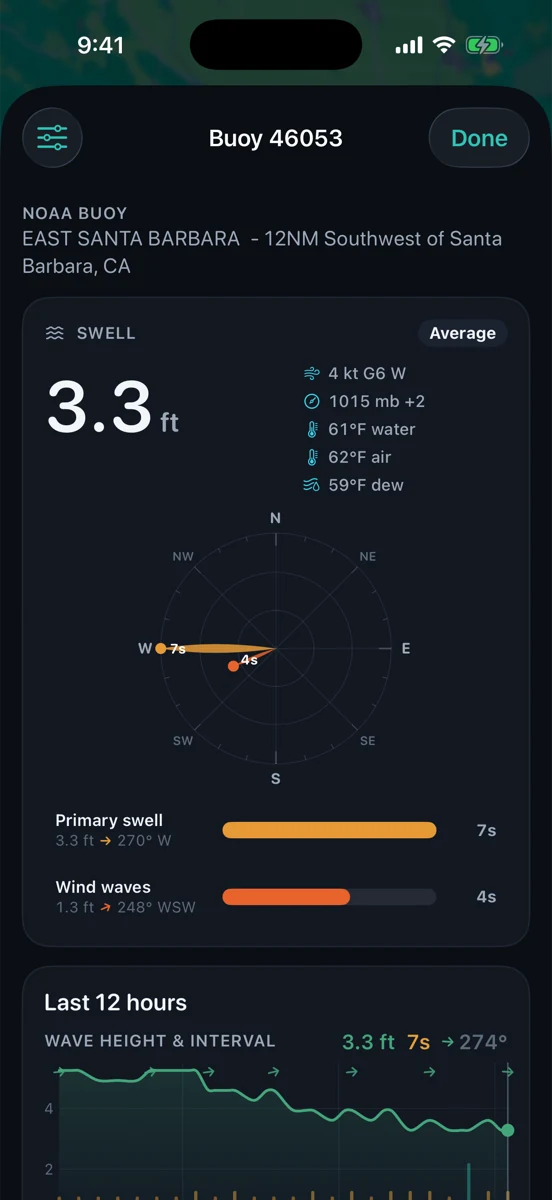
Bring in wind, swell, and water temperature
A clean tide window can still get worked over by wind or surf. Strong onshore wind may make the trough hard to read and bury your bait in grass. Long-period swell can add energy and current even when the tide looks friendly on paper. A water-temperature change can move bait, especially after upwelling or a warm push.
That is where buoy history helps. A single latest number is useful, but the trend is better. Is the wind climbing? Is the period stretching? Did water temperature drop hard overnight? Pair that with the buoy-reading basics and the tide curve before choosing the beach.
A simple surf-fishing tide check
Start with your target beach and the next two tide turns. Note whether the water is flooding or ebbing during the hour you can actually fish. Check the beach shape at low if you can. Then read wind, swell, and any marine forecast notes. If a National Weather Service advisory is active, slow down and read the details; our Small Craft Advisory guide explains how to treat that as a timing note, not a go/no-go button.
Finally, keep the tide prediction in its lane. NOAA predictions give the astronomical baseline for a station. Real water can be moved by wind, pressure, swell, runoff, and local geography. If you want the deeper version, read how tide predictions work.
How RipCat helps
RipCat puts NOAA tide predictions, NDBC and compatible CDIP buoy observations, National Weather Service marine advisories, water temperature, and dark-mode planning tools in one Apple-native app for U.S. waters. For anglers, that means the tide curve, moving-water timing, buoy history, and forecast context live close together before the drive.
If you are mapping use cases, start with the fishing view, then check the surf view for swell and dawn-patrol context or the boating view for advisory and buoy planning. Station-specific tide pages are still in pilot review, so this post links to segment guides and the existing explainers for now.
Fish the moving water, not a myth.
RipCat helps you read tide movement, buoy history, water temperature, and advisories before you make the drive. U.S. coverage only. Predictions and observations are planning aids, not navigation advice.
Get RipCat free on the App Store